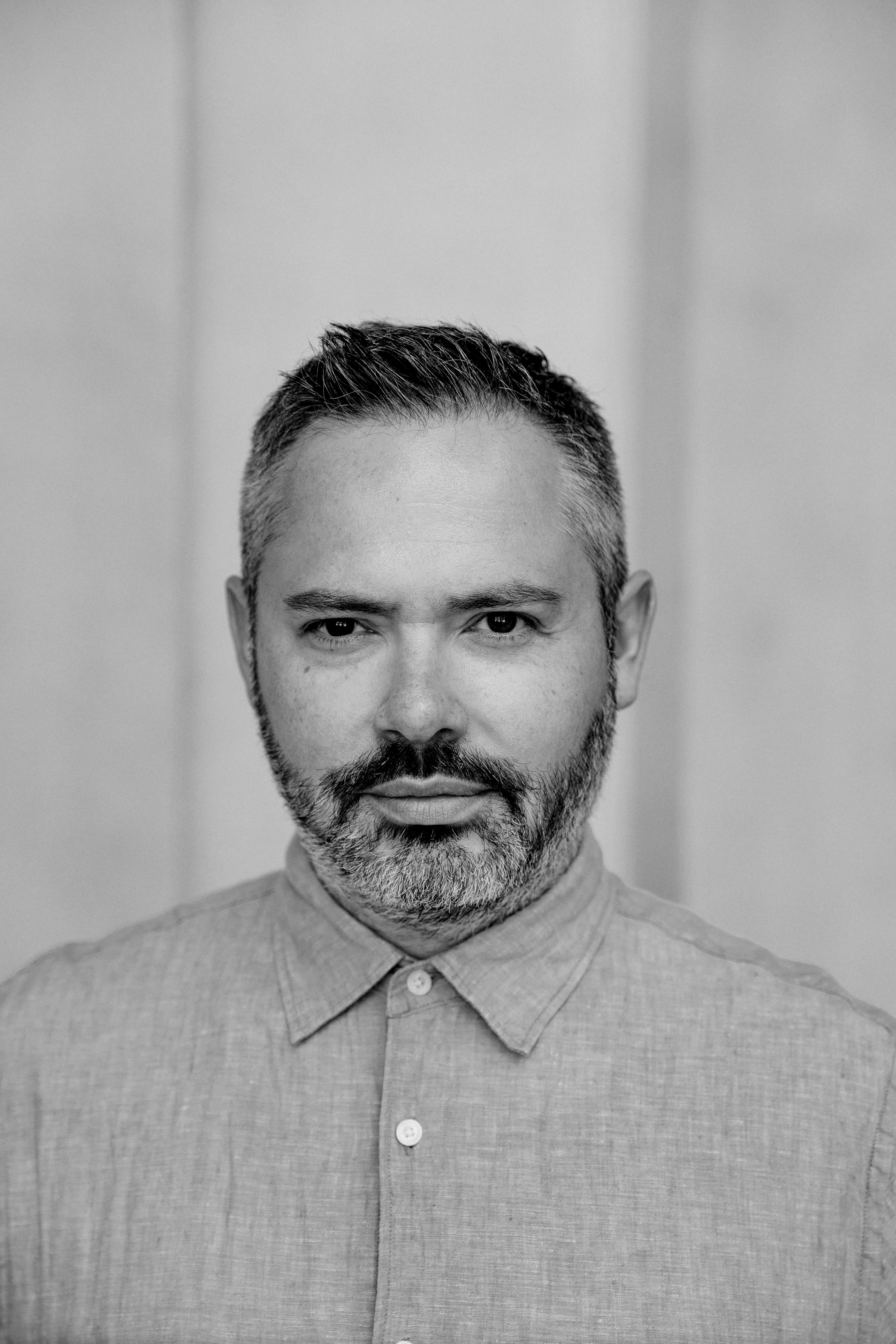
Artem Karida

Author of the Engineering Legitimacy theory

Artem Karida

Artem Karida

Why capability alone is not enough — from individuals to nations.

For more than twenty years I have watched this gap in strategy work, in running companies and in teaching. A theory grew out of those observations, and I set it out in a book.

Experience

  • More than 20 years

    in strategy, consulting and running companies

  • More than 6,000 students

    from 108 countries

  • More than 10 years

    teaching strategy and innovation management

Istituto Marangoni IULM University POLIMI Graduate School of Management British Higher School of Art and Design

Where the gap appears

Capability and results are there, but they do not convince those who decide. Most often this happens at a moment of transition — to a new role, audience or territory.

  1. A new role, audience or territory

    Evidence that convinced in the previous context does not carry over automatically. The question is who makes the decision now and which grounds carry independent weight for that audience.

  2. Repositioning

    The language, image or presentation has changed, yet the audience’s attitude has stayed the same. Sometimes the new expression keeps the original claim. Sometimes the audience begins to see a different claim. These situations call for different decisions.

  3. The gap between capability and recognition

    The results exist, but those who decide cannot connect them to the claimed role, status or right to act.

  4. Weakening and recovery

    Earlier evidence loses its meaning, those who used to confirm the claim step back, and repeated actions continue out of inertia. Repairing these links creates the conditions for a new assessment. Recovery comes when the audience once again recognises the original claim in a sustained way.

How I work

Strategic consulting

We begin by setting the bounds of the question: who claims which role, whose recognition matters, where and in which decision. Then we examine what recognition rests on and where the link has broken. The result is a diagnosis: what blocks progress, where to start and what will take time.

Discuss a strategic question

Teaching

Courses, workshops and programmes for universities, business schools, professional communities and executives. Topics: strategy, innovation management, recognition and legitimacy — how they arise, transfer, weaken and recover. Each programme is built for its audience.

Discuss a programme

Talks

Talks and lectures for conferences, universities, companies and institutions. Topics: why capability is not enough for recognition; what changes in the move to a new role; what authority rests on; how recognition collapses and recovers.

Invite me to speak

Talks and events

Upcoming talks

12 November 2026

Milan

2nd International Conference on Sustainable Creative Art (SCIN 2026)

Istituto Marangoni Milano — Palazzo Turati

Day three of the conference

Talk

Engineering Legitimacy: Fashion Archives, Generative AI and Sustained Recognition

About the conference ↗

Methodology

Engineering Legitimacy

I developed a structural theory of how legitimacy is created, reinforced, normalised, lost and recovered.

Legitimacy is the sustained recognition by an audience that a subject’s claim to a defined role, status, or right to act within a given domain is justified and appropriate within a specific territory, period, and decision context.

Engineering legitimacy means a bounded ability to influence the conditions under which an audience assesses a claim. Interpretation and the decision to recognise remain with the audience.

The full model ↗

In preparation for publication in 2026

Engineering LegitimacyThe Architecture of Sustained Recognition

The theory volume of the series.

  1. Part OneWhy Collective Belief Has Structure
  2. Part TwoThe Architecture of Legitimacy
  3. Part ThreeEvidence and Structural Depth
  4. Part FourLegitimacy in Context
  5. Part FiveCollapse and Recovery
  6. Part SixThe Operating Logic of Legitimacy

A series of applied books

A separate book for each class of subject, with its own cases, evidence and tools.

  • Personal
  • Business
  • Institutions
  • Territories
  • Countries

Titles and dates will be announced for each book separately.

About

Artem Karida is a professor and the author of the framework Engineering Legitimacy: The Architecture of Sustained Recognition. Since 2015 he has led programmes in strategy and innovation at Istituto Marangoni, IULM University and POLIMI Graduate School of Management in Milan, and at the British Higher School of Art and Design in Moscow; more than six thousand students from 108 countries have taken them.

He has more than twenty years of practice in strategic consulting and in leading the development of state-owned and private companies. He is a graduate of Saint Petersburg State University and of the MBA programme at Politecnico di Milano.

Contact

If you would like to discuss a strategic question, an education programme, a talk, an interview or a publication, write to me.

contact@engineeringlegitimacy.com